Drainage condition discharge: consultancy flags 12–16-week approval programmes
The Drainage Designers advises developers to allow beyond the eight-week determination period and resolve testing, storage calculations and maintenance details before submission.
Key facts
- The Drainage Designers updated its condition discharge guidance on 10 October 2026.
- The guidance puts most drainage condition discharge applications at 12–16 weeks from submission to approval.
- The guidance says the eight-week determination period starts only once an application is valid.
- The guidance identifies missing infiltration testing as a common cause of application delays.
- The guidance calls for calculations covering a 1-in-100-year rainfall event plus a climate change allowance.
Guidance puts drainage approvals beyond eight-week determination period
Developers should programme 12–16 weeks between submitting drainage condition discharge applications and receiving formal approval, according to guidance from The Drainage Designers. The consultancy’s estimate extends beyond the eight-week determination period described in its advice, making the approval programme a consideration for projects where drainage conditions prevent construction from starting.
The Drainage Designers (Woodvale consulting Ltd) updated the guidance on 10 October 2026. Its timing estimates represent consultancy advice, not measured national performance, and the publication contains an unresolved discrepancy: its frequently asked questions section gives a practical range of 4 to 12 weeks, rather than the 12–16 weeks cited in its main discussion.
Validation marks the start of the eight-week determination period, the guidance says, rather than the date an applicant first sends documents to the authority. The authority needs the completed application form, payment of the fee and all required supporting material before that clock begins, distinguishing initial submission from a valid application.
The consultancy gives several further programme estimates according to complexity. It puts straightforward drainage applications at 8–10 weeks, but says cases needing several consultees, infiltration testing or flood risk assessment can require 16–20 weeks or more; elsewhere, it recommends a 14–15-week allowance rather than relying on eight weeks.
Consultation takes place alongside the planning authority’s determination, but the guidance says consultees can use the entire eight-week period or take longer to respond. Objections or requests for design changes can therefore push approval beyond that period; applicants typically have 10–15 working days to supply amended drawings, calculations or explanations, according to the consultancy.
Some authorities offer faster-track procedures, with the guidance suggesting approval in 6–8 weeks where designs are uncomplicated and consultees raise no comments. It associates these cases with public sewer connections, low flood risk and simple surface water arrangements, rather than presenting accelerated determination as an option available to every drainage applicant.
The consultancy advises applicants still awaiting a decision eight weeks after validation to ask the planning department for an update. It also warns that starting before a pre-commencement condition has been discharged can expose a project to enforcement and expensive alterations to installed drainage; its wider warnings cover possible insurance disputes, building control sign-off difficulties and complications for subsequent sales or mortgage arrangements.
Condition wording sets the technical evidence required
The planning decision notice establishes what must receive approval before construction, according to the guidance. It describes pre-commencement drainage conditions as requirements for written acceptance of specified drainage proposals before building work begins, while noting that other conditions may be dealt with later; the evidence must demonstrate compliance with drainage, environmental and flood risk requirements.
Applicants should translate the wording of each condition into a document checklist, rather than assume every authority requires an identical package. The guidance identifies drainage layouts, storm calculations, consultation correspondence, surface water proposals and foul connection information, alongside the application form and a copy of the condition; some authorities also request a covering letter explaining how the submission addresses each requirement.
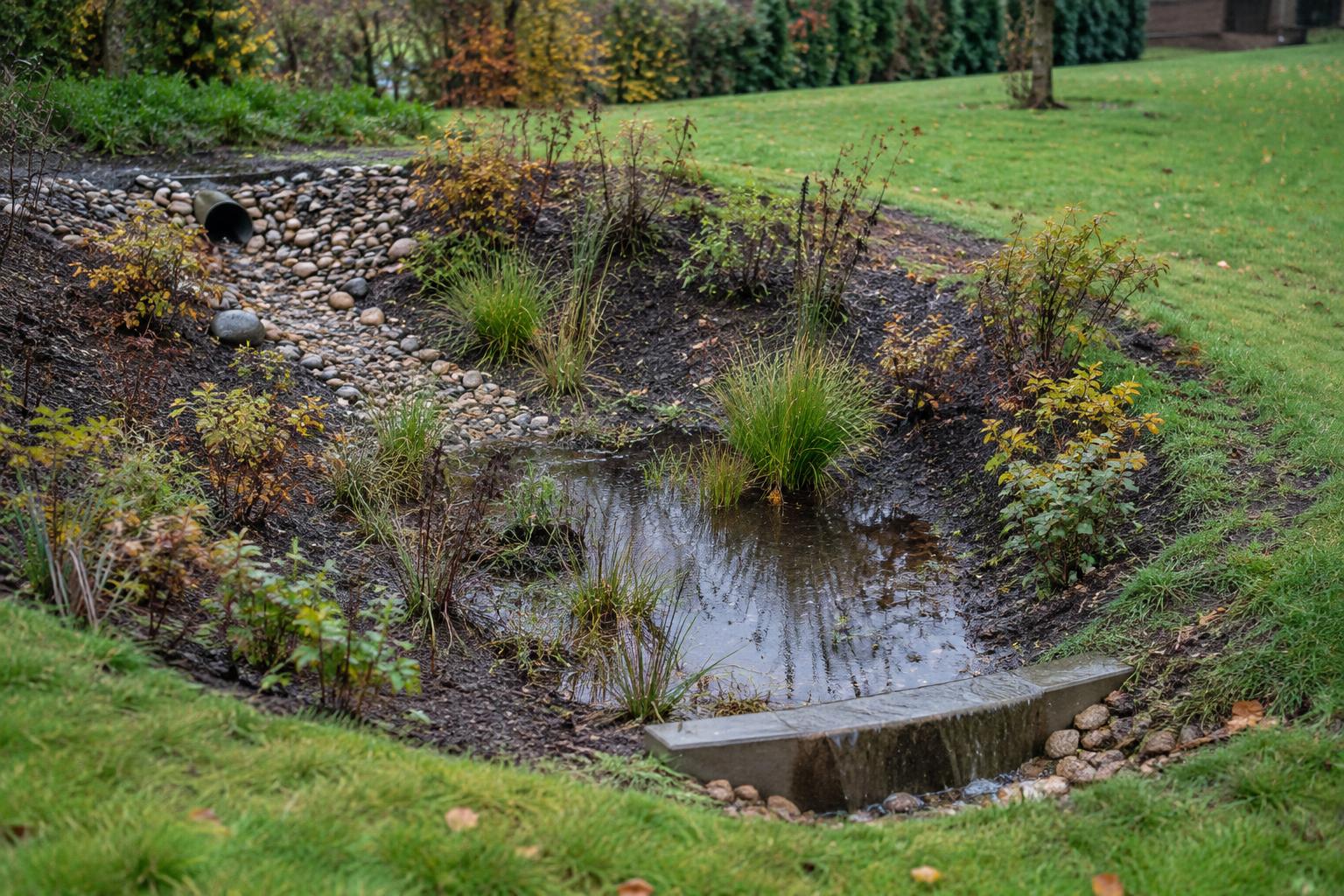
For surface water, the guidance describes sustainable drainage systems (SuDS), which manage runoff through measures including infiltration, temporary storage known as attenuation, and controlled release to watercourses. It says these systems are typically required unless site conditions prevent their use, with ground permeability, nearby watercourses, neighbouring properties and local authority preferences influencing the design.
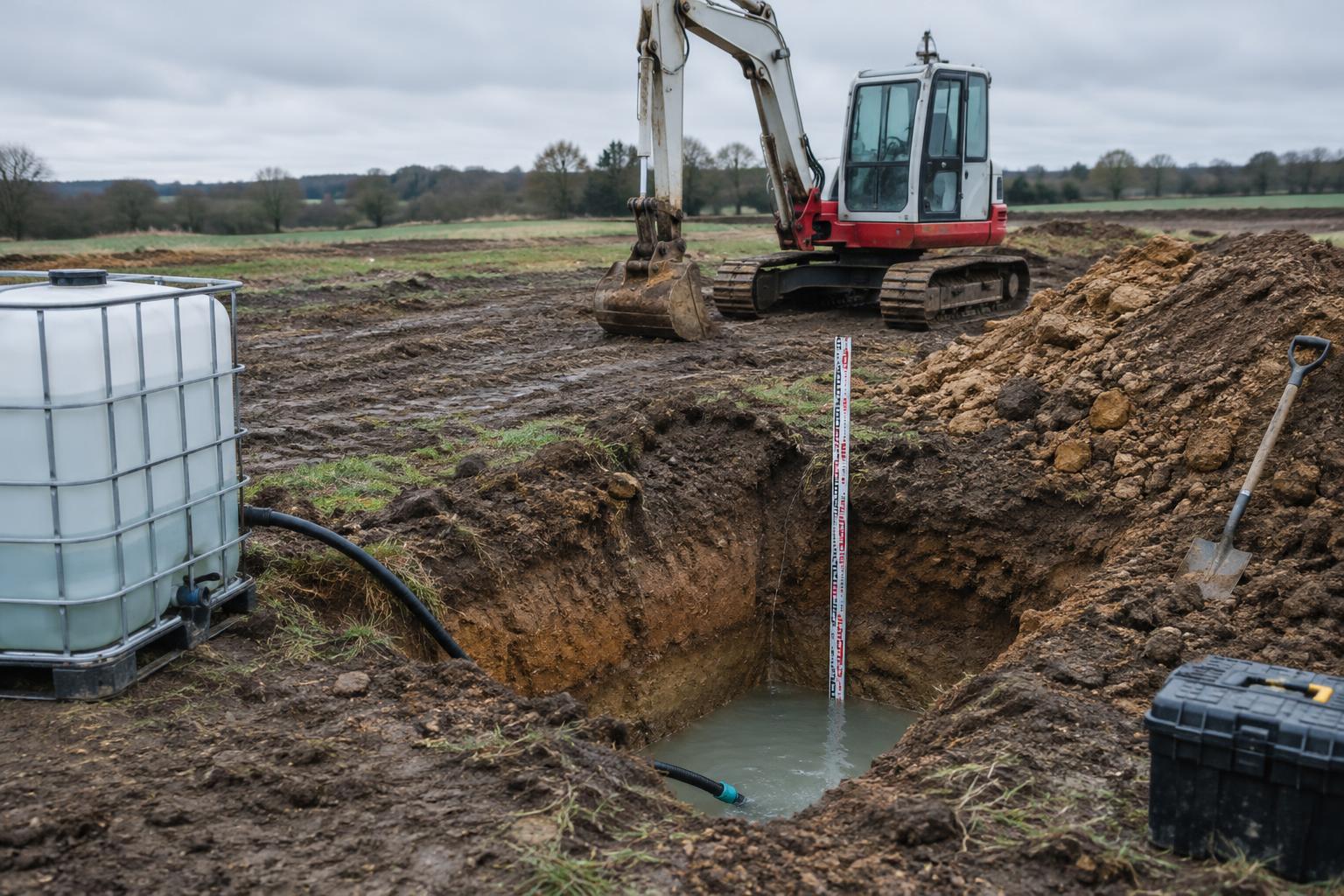
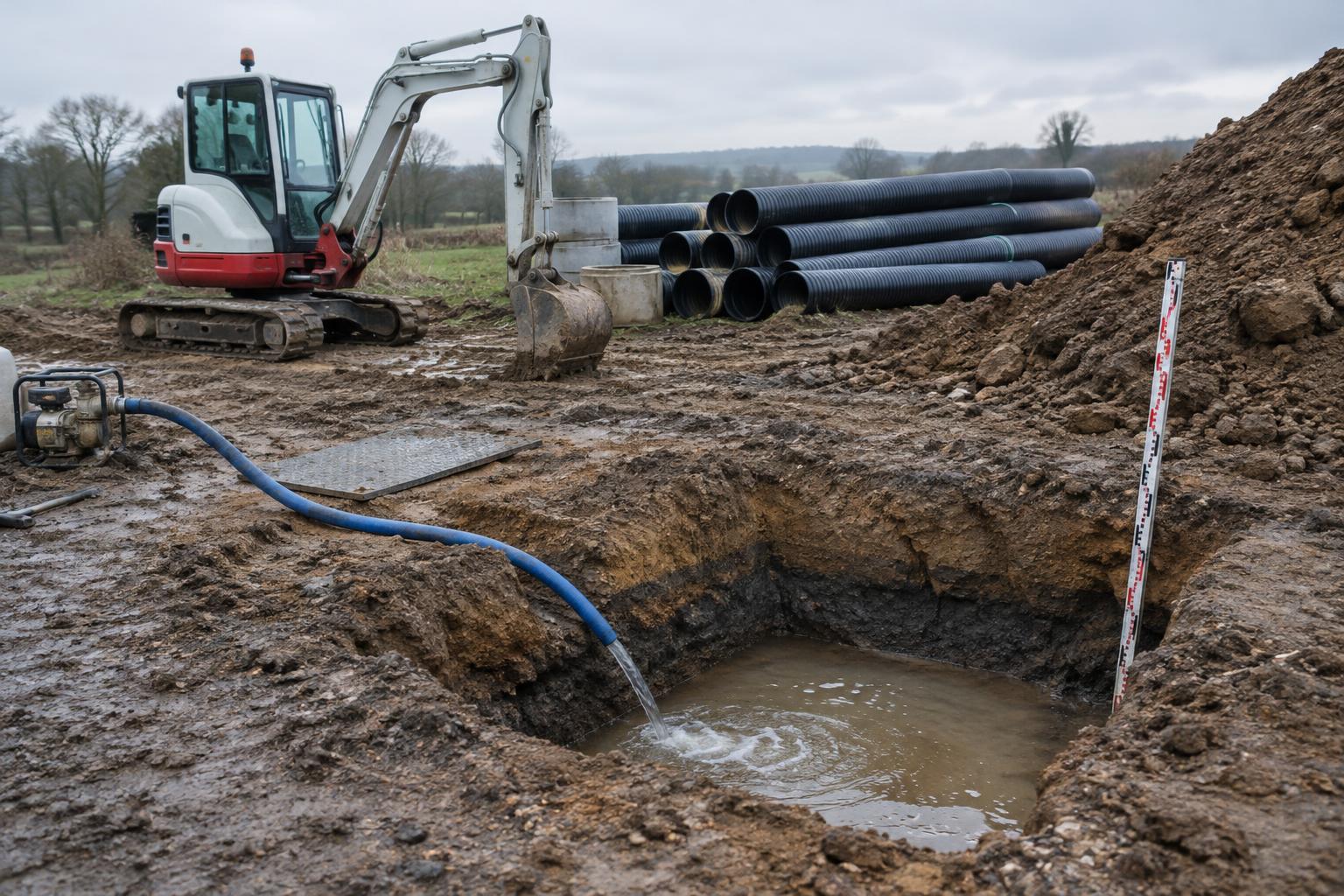
The cited surface water submission includes site plans and calculations demonstrating capacity for a 1-in-100-year rainfall event with an additional climate change allowance. Where infiltration forms part of the proposal, testing evidence is also required: the consultancy describes trial pits at least 1 metre deep, filled with water and monitored to establish the rate at which the water level falls.
Storage calculations need to connect rainfall intensity and site runoff with the volume required to accommodate peak runoff, supported by an explicit account of inputs, assumptions and results. The guidance identifies runoff coefficients, rainfall intensity, climate change allowances, storage volumes and discharge rates as matters consultees may query; missing tests and inadequately justified calculations feature among its stated causes of rejection or delay.
Lead Local Flood Authorities (LLFAs) examine surface water strategies, attenuation calculations and maintenance arrangements, the consultancy says. It also identifies approval roles for water and sewerage companies and, for main rivers, the Environment Agency, depending on the proposed discharge destination; foul drainage proposals may involve a public sewer or treatment system such as a septic tank, with water companies confirming connection feasibility.
Long-term operation forms part of the technical case: the submission should identify who maintains the drainage and how frequently, while flood risk assessment establishes the need for mitigation. Before applying, the consultancy recommends completing necessary infiltration tests, obtaining LLFA or water company feedback and checking drawings against the permission; where a consultee requirement cannot be met, it advises proposing an alternative for reconsultation.
Consultancy identifies testing and calculation gaps
Failure to agree discharge rates and leaving consultee comments unanswered are further causes of rejection or delay identified by The Drainage Designers. Its assessment treats agreement over the proposed outlet flow as a separate issue from the supporting storage calculations: a submission can face outstanding questions about discharge even where it includes calculations for the drainage system.
For proposals involving public sewers or watercourses, the guidance describes a capacity check by the receiving organisation. The purpose is to establish whether the proposed discharge would overload its network. That review concerns the effect of releasing water beyond the development, rather than solely the capacity provided within the site’s drainage design.
The consultancy also identifies failure to demonstrate SuDS principles as a reason applications encounter difficulties. Separately, it says a drainage strategy that does not comply with the local authority’s SuDS guidance can prompt a request for further information. Its advice therefore distinguishes evidence supporting the engineering design from evidence that the proposal meets local guidance.
Review comments can require revised attenuation calculations or impose discharge rate constraints, according to the publication. These are requests that may change the submitted proposal, rather than simply seek an explanation of it. The technical assessment comes from the consultancy’s own guidance; the source provides no named consultee account of how those requests were resolved on a particular scheme.
Applicants advised to resolve evidence gaps before submission
The consultancy recommends addressing likely consultee concerns in the initial application, rather than waiting for reviewers to identify them. Its advice places that work within preparation of the submission itself. This is a recommendation about how applicants assemble their technical case, not an announcement of a new application procedure or a change to drainage regulation.
Applicants should check the local planning authority’s website for its specific submission requirements, the guidance says. It also notes that most authorities provide online upload portals. The recommendation concerns the authority’s own application arrangements: the consultancy does not identify a single national portal or prescribe a uniform electronic submission format for drainage condition discharge.
When a response is required, the consultancy advises supplying revised drawings, calculations or clarifications promptly and comprehensively. It specifically warns that vague or incomplete replies lead to further requests. That warning concerns the substance of the applicant’s answer, not just its speed: sending a reply does not necessarily resolve the technical point raised by the reviewer.
The guidance also recommends presenting drawings, calculations and consultation responses as an organised package. It lists missing consultation responses among common submission mistakes, distinguishing an omitted record from a technical disagreement. For applicants preparing evidence before submission, the correspondence forms part of the material reviewers need alongside the design documents, rather than remaining outside the application.
Why this matters
The guidance’s warnings extend to the position after a breach has occurred. According to the consultancy, ignoring an enforcement notice can lead to fines or prosecution, while eventual discharge does not remove the breach from the record and may affect future applications on the site. It also says retrospective discharge, where the authority agrees to it, is slower and more expensive than obtaining approval prospectively—an additional consideration for professionals advising on project sequencing.
Frequently asked questions
how long does it take to discharge a drainage condition?
The Drainage Designers’ guidance, updated on 10 October 2026, puts most applications at 12–16 weeks from submission to approval. It estimates 8–10 weeks for simple cases and 16–20 weeks or longer where testing, flood risk assessment or multiple consultees complicate review.
when does the eight week period for discharging planning conditions start?
According to The Drainage Designers, the eight-week determination period begins once the local planning authority validates the application, not when it first receives it. Validation requires all necessary documents, a completed application form and payment of the fee.
why is my drainage condition discharge application delayed?
The Drainage Designers identifies missing infiltration testing as a common cause. Other issues include unjustified storage calculations, unanswered consultee comments, unagreed discharge rates and missing maintenance schedules. Infiltration tests measure how quickly water enters the ground.
what documents do I need to discharge a drainage condition?
The planning decision notice specifies the requirements. The Drainage Designers lists drainage drawings, storm calculations, consultation evidence, surface water management details and foul drainage connections. Surface water submissions also need maintenance schedules, applicable infiltration testing and evidence of sustainable drainage systems (SuDS) principles.
what rainfall event should drainage condition calculations cover?
The Drainage Designers calls for calculations demonstrating capacity for a 1-in-100-year rainfall event plus a climate change allowance. Calculations for attenuation, which temporarily stores runoff, should explain rainfall assumptions, site runoff, storage volumes and discharge rates.
who reviews drainage condition discharge applications?
The local planning authority determines the application. According to The Drainage Designers, it consults the Lead Local Flood Authority on surface water proposals, storage calculations and maintenance. Water and sewerage companies or the Environment Agency also review relevant sewer or main river discharges.
can I start building before a pre commencement drainage condition is discharged?
The Drainage Designers says developers must obtain written approval for the required drainage details before starting building work. Starting without discharge breaches planning permission and risks enforcement action by the local planning authority.
how long do I have to respond to drainage consultee comments?
The Drainage Designers gives a typical response period of 10–15 working days for revised drawings, calculations or clarifications. Consultees may request infiltration testing, revised storage calculations, discharge limits or maintenance schedules. Incomplete responses can prompt further requests and extend approval times.
Related coverage